
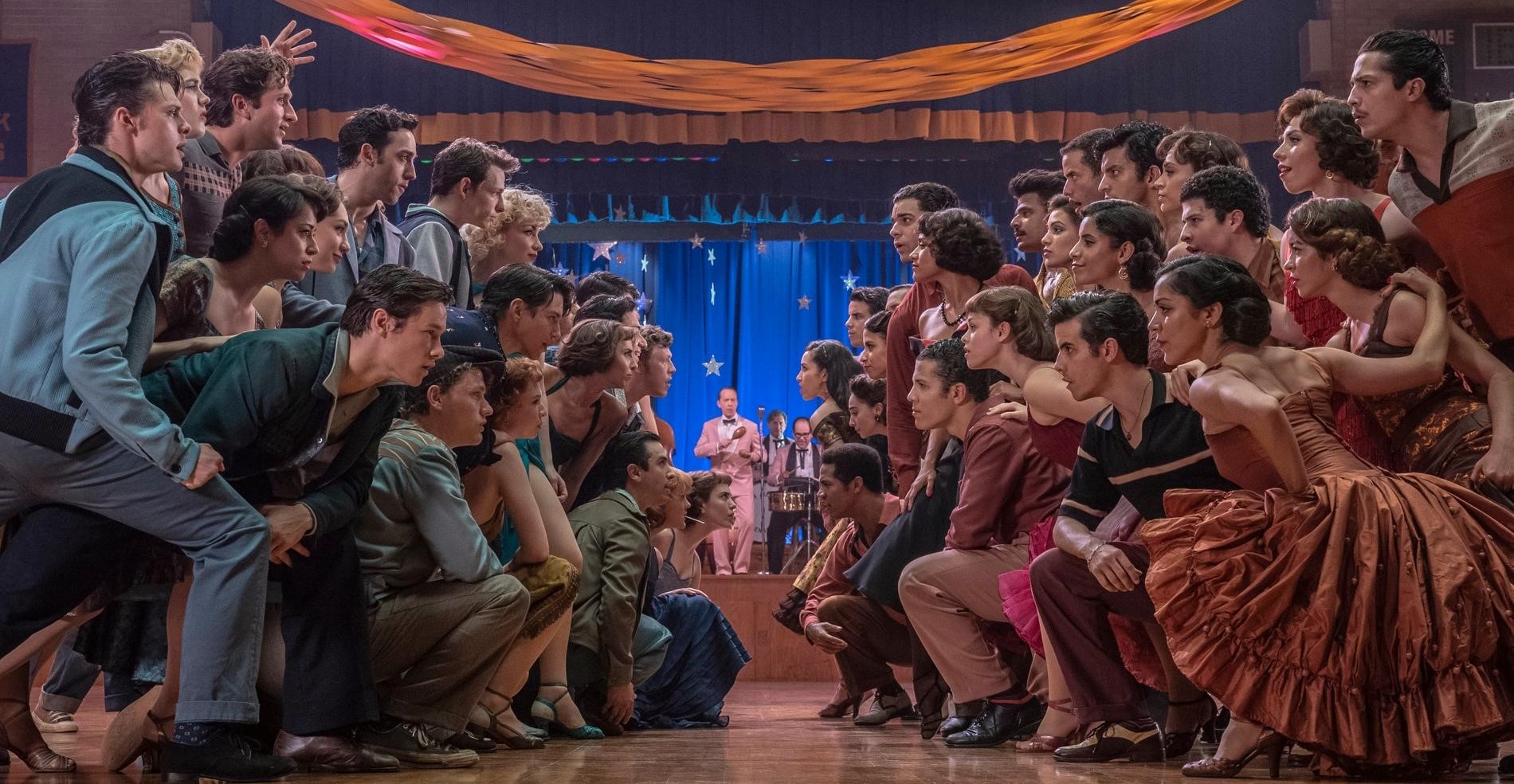
Dialectics focuses on opposing ideas and forces. Image: High School Musical(?) IDK.
Dialectics: Making Sense of History
based on Leon Trotsky's "ABC of Materialist Dialectics" (1939)
What It Is
Unlike
Background
Karl Marx’s materialist dialectics builds on — and responds to — Georg Wilhelm Friedrich Hegel’s earlier system of dialectics. Hegel created the thesis-antithesis-synthesis structure in the early 1800s, applying it to the foundations of consciousness, psychology, and, later, as a method of logic. In the mid-1800s, Marx took this and applied it to the material world: history, politics, economics.
A Little More Detail...
Capitalism began in the humble workshops and towns of feudal Europe. Initially, competition between businesses motivated economic development, but by Lenin’s time in the late 19th and early 20th centuries, this competition had given way to industries being dominated by monopolies. Small businesses could no longer compete with the vast power of a small handful of massive companies (“cartels”), who could manipulate supply chains, workforces, market prices, etc.
“Cartels come to an agreement on the terms of sale, dates of payment, etc. They divide the markets among themselves. They fix the quantity of goods to be produced. They fix prices. They divide the profits among the various enterprises, etc.”
Similarly, banks began as simple savers and lenders of money and had also, by Lenin’s time, concentrated into fewer, larger banks, absorbing smaller banks and getting bigger by investing into corporations. Bankers became corporate board members and also decided which businesses received loans, allowing them to influence industries from both inside and outside of companies. So a huge financial sector emerges under capitalism and becomes intertwined with other industries, both consolidating into fewer, bigger banks and companies.
But a corporation can only get so big within its country of origin. To make bigger profits, companies (and their banker investors) start buying factories and farms in other countries: colonies. Western companies start expanding into colonies. Colonies start their own businesses but receive loans from Western banks. So colonies become dependent on, subordinate to Western investors. When Western companies use their efficient profitability to invest in colonies – rather than raising the standard of living for their countrymen at home – that’s a defining feature of imperialism.
Speaking of which, all of that money and power concentrated in industry and finance – that doesn’t stay separate from the government (i.e. the people with guns). As we know all too well in the 21st century, politicians constantly collaborate with corporations and banks, serving on each others’ boards and committees. Guns are a great way to access cheap land and cheap labor, and so Western governments carved out territories on behalf of corporations and banks. This marks a new era of capitalism: imperialism, the highest stage of capitalism.
Lenin defines imperialism as having five features distinguishing it from the truly free market capitalism before it:
- “the concentration of production and capital has developed to such a high stage that it has created monopolies which play a decisive role in economic life;
- the merging of bank capital with industrial capital, and the creation, on the basis of this “finance capital,” of a financial oligarchy;
- the export of capital as distinguished from the export of commodities acquires exceptional importance;
- the formation of international monopolist capitalist associations which share the world among themselves and
- the territorial division of the whole world among the biggest capitalist powers is completed. Imperialism is capitalism at that stage of development at which the dominance of monopolies and finance capital is established; in which the export of capital has acquired pronounced importance; in which the division of the world among the international trusts has begun, in which the division of all territories of the globe among the biggest capitalist powers has been completed.”
And, once all the potential territory is brutally taken by Western powers, now the Western powers turn their guns against each other. So British companies aren’t just competing with French companies in the marketplace – they’re literally fighting each other with guns! Thus, World War 1 (and, later, World War 2).
Also, now that everything’s monopolized and companies aren’t actually competing with each other in the marketplace… why bother with innovating? And if it’s cheaper to have factories in colonies instead of in the Western imperial core… why not just invest your money in those colonial factories? Western countries can just focus on maintaining their military dominance while rich people sit on their foreign investments. Lenin calls this “decay”.
So… despite being over 100 years old, Lenin’s writing is still very relevant today in the 21st century. It explains how and why Western capitalism came to dominate the world, and we’re seeing the continuing “decay” of Western countries that have huge, robust finance sectors while almost entirely outsourcing their manufacturing to colonized, non-Western countries.
See Also...
- Imperialism
- Liberalism
- Capitalism
- Inherent Contradictions
- Book1
- B2
- B3
- B4